The legendary LucasArts point & click adventure video games (1986 - 1998)

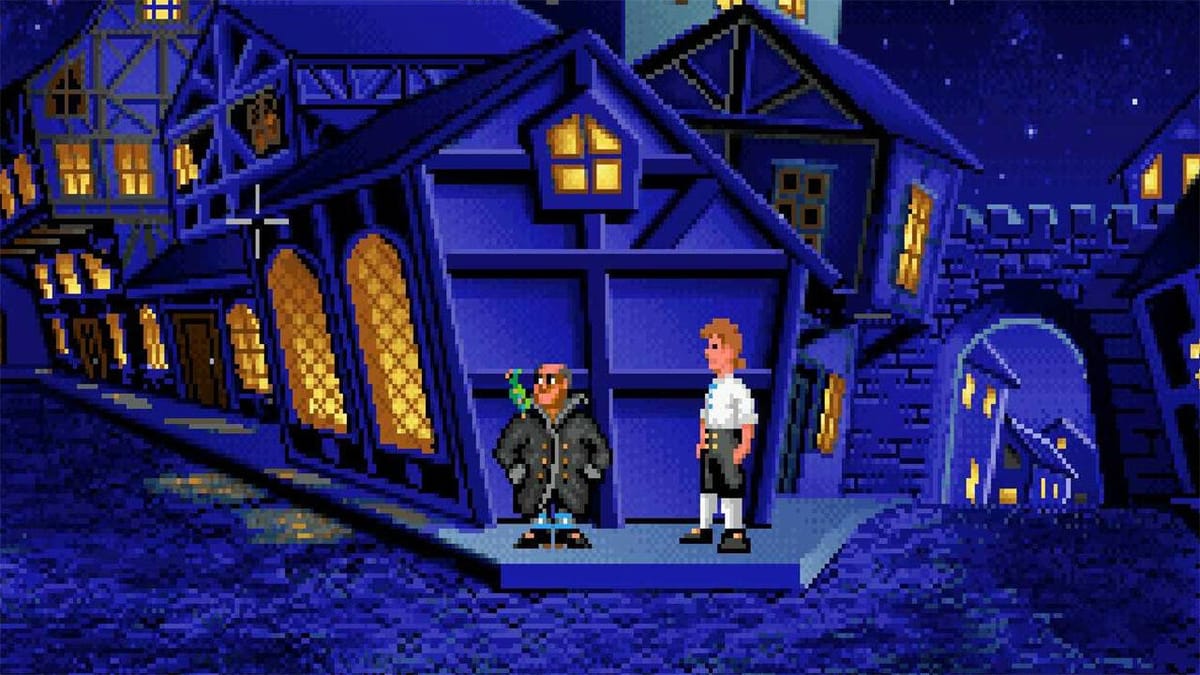
Lucas... Like in George Lucas?
For a good part of my childhood, I played Monkey Island (I & II) using floppy disks. The game also came with a paper code-wheel, which was required to start the game. It was clever, fun and playful just like the game itself, involving pirate heads and voodoo recipes.
I played countless hours of those point and click games on the family PC, doing and redoing the adventures, entering spit contests, insult battles, negotiating with a voodoo priestess in a swamp, inserting a giant cotton stem in the ear of a giant monkey head, battling Le Chuck and his pirate-ghost crew.
Never during all those years of blissful fun and witty humor did it occur to me there could be a connection between the movie producer superstar George Lucas (Star Wars, Indiana Jones, etc.) and that funny game I was playing when coming home from school.
If you'd like to try it out, there are interactive versions of the code-wheels for Monkey Island I here, and for Monkey Island II there.
The truth was revealed to me in an episode of Big Bang Theory, thirty years later. The one when Sheldon and Leonard decide to make a little detour to Lucas's ranch (the "Skywalker Ranch") on their way to a conference, present themselves at the entrance, attempt a "forced entry", Sheldon gets tased, they end up in detention, miss their conference and go home.

Only then did I connect the dots: the same Mr. Lucas behind Star Wars was also the mind behind LucasArts—the company behind the game. All the in-game clues finally made sense: the LucasArts logo behind Chester, the woman you could call for help when lost in the jungle on Dinky Island; the hint line number ending in "JEDI"; and Chester answering the phone with, "LucasFilm Games Hint Line." It finally clicked. Lucas... like in George Lucas!
The "Call the Hint Line" scene in Monkey Island 2, where Guybrush meets the very unhelpful Chester
The birth of the company
That got me thinking: what drove such a successful filmmaker to dive into video games in the early 1980s? George Lucas wasn’t just a director or producer—he was a pioneer, always looking for new ways to tell stories and push the limits of technology.
He founded the production company LucasFilm in 1971 in San Rafael, California, and was from the start pushing the boundaries of what could be done with sound design, special effects and computer graphics. When founding the LucasFilm Games in 1982, his intention was more to build a R&D lab and to explore interactive story-telling, rather than to build a "Hollywood-machine" commercial studio. LucasFilm Games was renamed LucasArts in 1990 as part of a larger reorganization of the LucasFilm divisions, but the initial name stuck around for a while. Until this beauty of a logo came out:
Consistent with Lucasfilm’s movie heritage, each game combines vital film elements – compelling storytelling, painstaking character development and vivid settings – with interactivity or “gameplay” acting as the element that distinguishes games from more traditional, linear mediums.”
- Presentation of the company on the "About" section of the late LucasArts website (archived on the WayBack Machine)
The people
LucasFilm Games put together from the start a team of video game designers and pioneers who ended up creating a unique style of adventure games still known today for their humor, cleverness, imagination and qualitative storytelling.
Among those pioneers, were:
- David Fox (one of the first employee, and co-author of a book called 'Computer Animation Primer' published in 1984 that probably contributed to earn him a spot at LucasArts),
- Noah Falstein (one of the first 10 employees entering in 1984, who collaborated closely with Steven Spielberg and George Lucas for the Indiana Jones games),
- Ron Gilbert (especially involved in the design of my beloved Monkey Island I & II, and main creator of the SCUMM technology behind the games),
- Gary Winnick (who was the only artist and animator in the team at the start in 1984),
- Dave Grossman (one of the three creators of Monkey Island games, voted among the 100 best game designers of all times by IGN in 2009),
- Tim Schafer (hired in 1989 as a "scummlet" - meaning someone using SCUMM to design puzzles and scenes). Tim's humorous writing style contributed a lot to the success of the game Monkey Island,
- Michael Stemmle (who also worked on the 2009 remake of Monkey Island),
- ... and many more talented folks.
The company was also getting help from external consultants (with no less than Douglas Adams, author of the Hitchhiker Guide to the Galaxy consulting on the first game Labyrinth in 1986), and Brenda Laurel, game designer and academic researcher who worked for Atari and acted as a creative consultant for LucasArts in the 1990s (Brenda is also the author of a book called "Computer as Theatre" - 1994 for the second edition).
People from that initial team pursued very successful careers in video game design after LucasArts, most of them founding their own game design or consulting companies.
The games
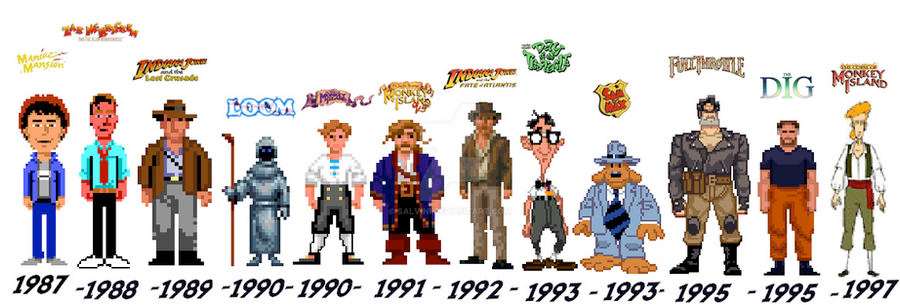
Though I mainly played two of their games, LucasArts produced many iconic titles over the years. The full list can be found on the dedicated LucasArts adventure games Wikipedia page. I'll present a selection of some iconic adventure games below:
- Maniac Mansion (1987) was mainly created by Ron Gilbert and Gary Winnick, and marked the debut of SCUMM, the game engine used for most of the other LucasArts games. The game is about one teenager and his friends trying to rescue his girlfriend from an evil scientist, navigating his disturbing mansion one puzzle at a time.
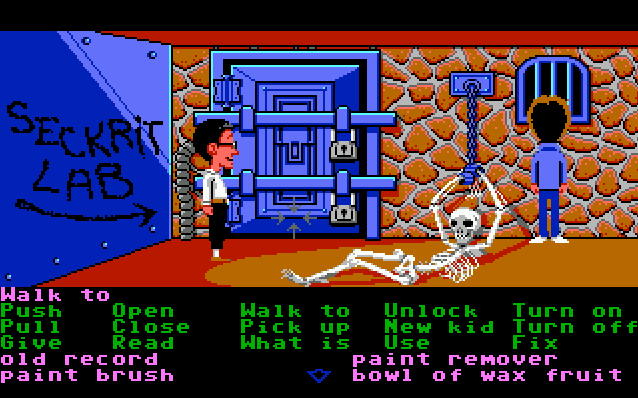
- Zak McKracken and the Alien Mindbenders (1988) was led by David Fox and Matthew Alan Kane, still relying on SCUMM and on the same kind of graphic interface and puzzles with humorous dialogues. The game is heavily inspired by the popular paranormal theories about aliens and mysterious, extinct civilizations.
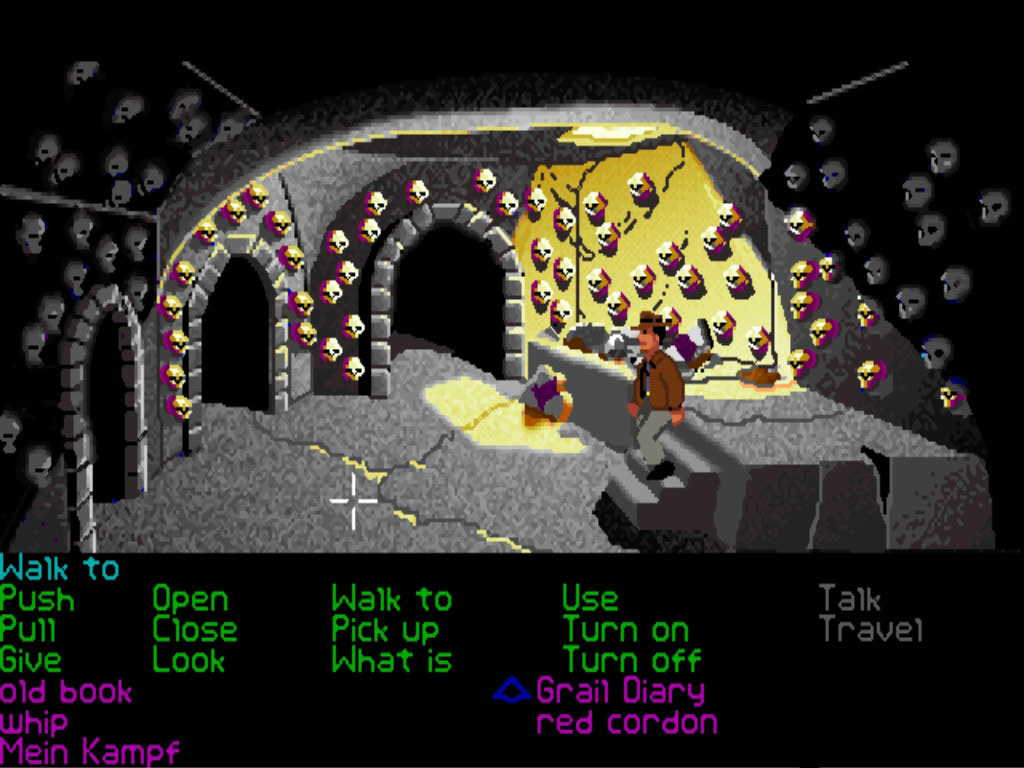
- Indiana Jones and the Last Crusade (1989) was the first video game released by LucasArts alongside a movie of the same name. The game was designed by Ron Gilbert, David Fox and Noah Falstein. It featured the same gameplay as the previous games, but added a system of points allowing the puzzles to be solved in different ways, enhancing the possibility for players to complete the games several times without performing the same actions.
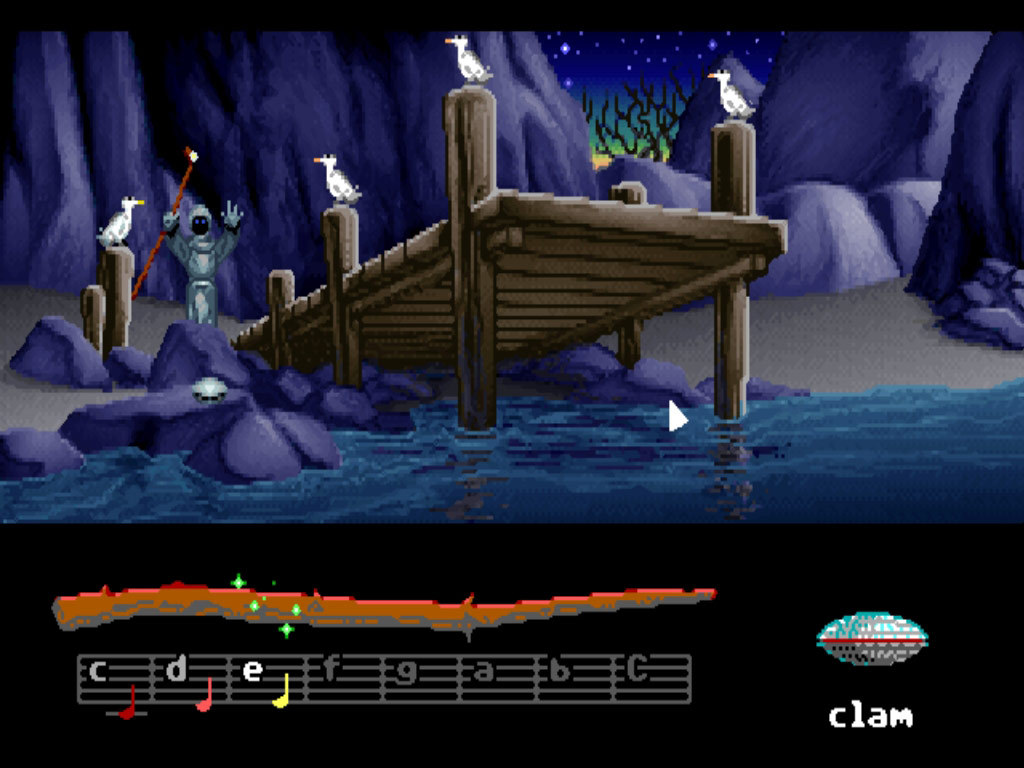
- Loom (1990) was designed by Brian Moriarty and offered a bit of a different gameplay than the previous "verb-centered" point & click games. Loom focused on sound and playing a specific series of notes to perform specific actions. There were three levels of difficulty, allowing for a wider audience to play the game without getting discouraged by the unusual gameplay.
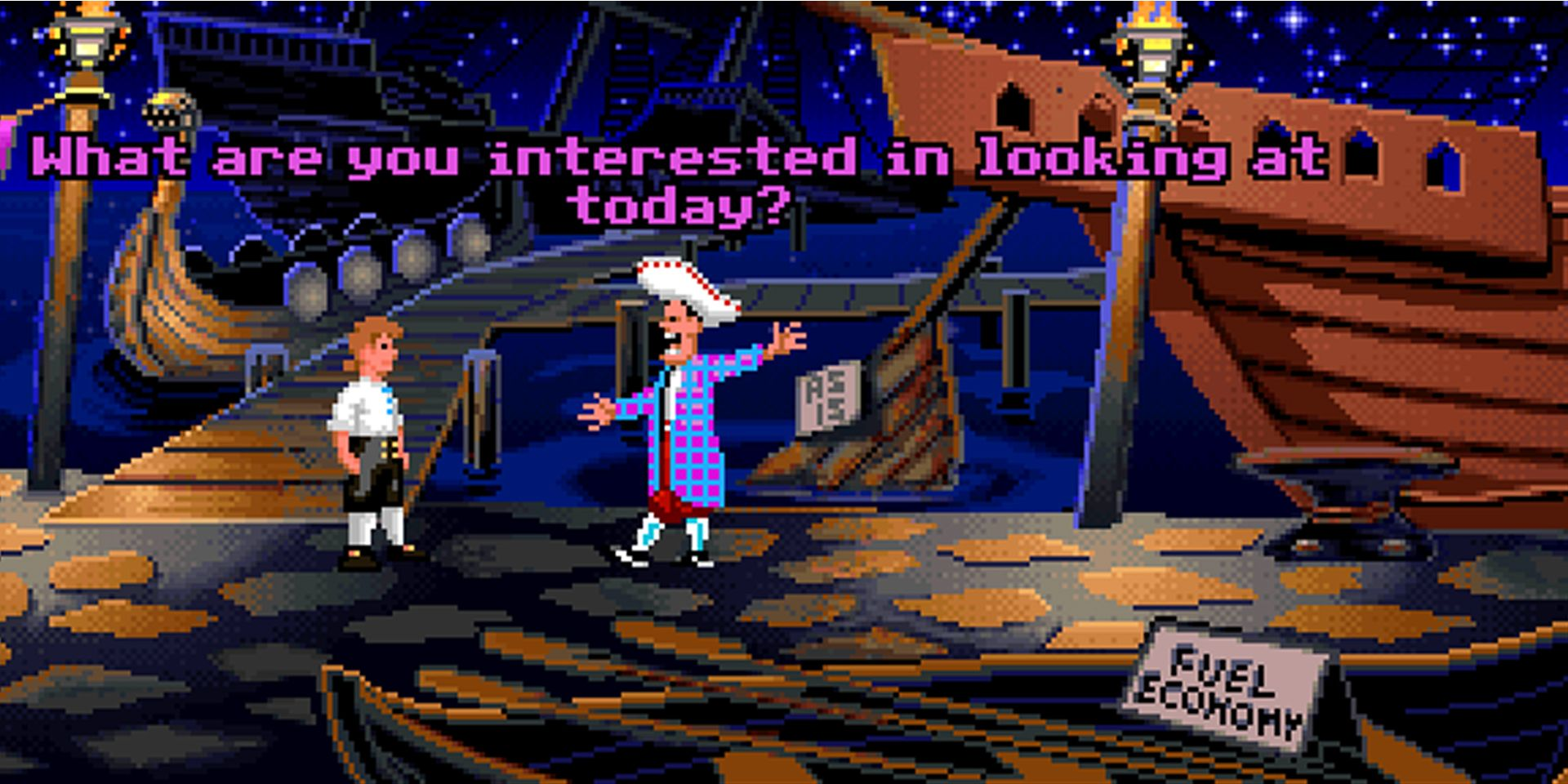
- Monkey Island 1 & 2 (1990, 1991): The games were created by Ron Gilbert, Tim Schafer, and Dave Grossman, drawing inspiration from Disneyland's Pirates of the Caribbean ride and Tim Powers' book On Stranger Tides (a historical fantasy novel involving dead pirates) for the plot and the ambiance. As I have mentioned, this is to me one of the best game in terms of dialogue, humor, adventure, decors and characters. The story features a young wannabe pirate, Guybrush Threepwood, trying to figure out the "secret of monkey island" without never really succeeding. The characters he meets along the way just adds to the overall fun of it, especially Stan, a very polyvalent and opportunistic salesman who appears on frequent occasions in the games, scamming Guybrush at every chance he gets.
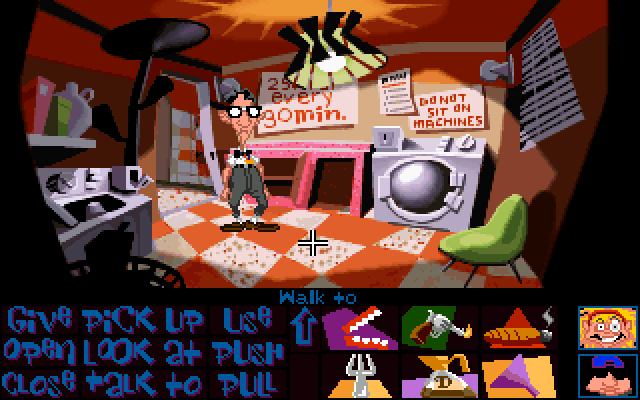
- Day of the Tentacle (1993) is the sequel to the 1987 game Maniac Mansion. The plot follows Bernard Bernoulli and his friends as they attempt to stop an evil purple Tentacle from taking over the world. The player takes control of the trio and solves puzzles while using time travel to explore different periods of history.
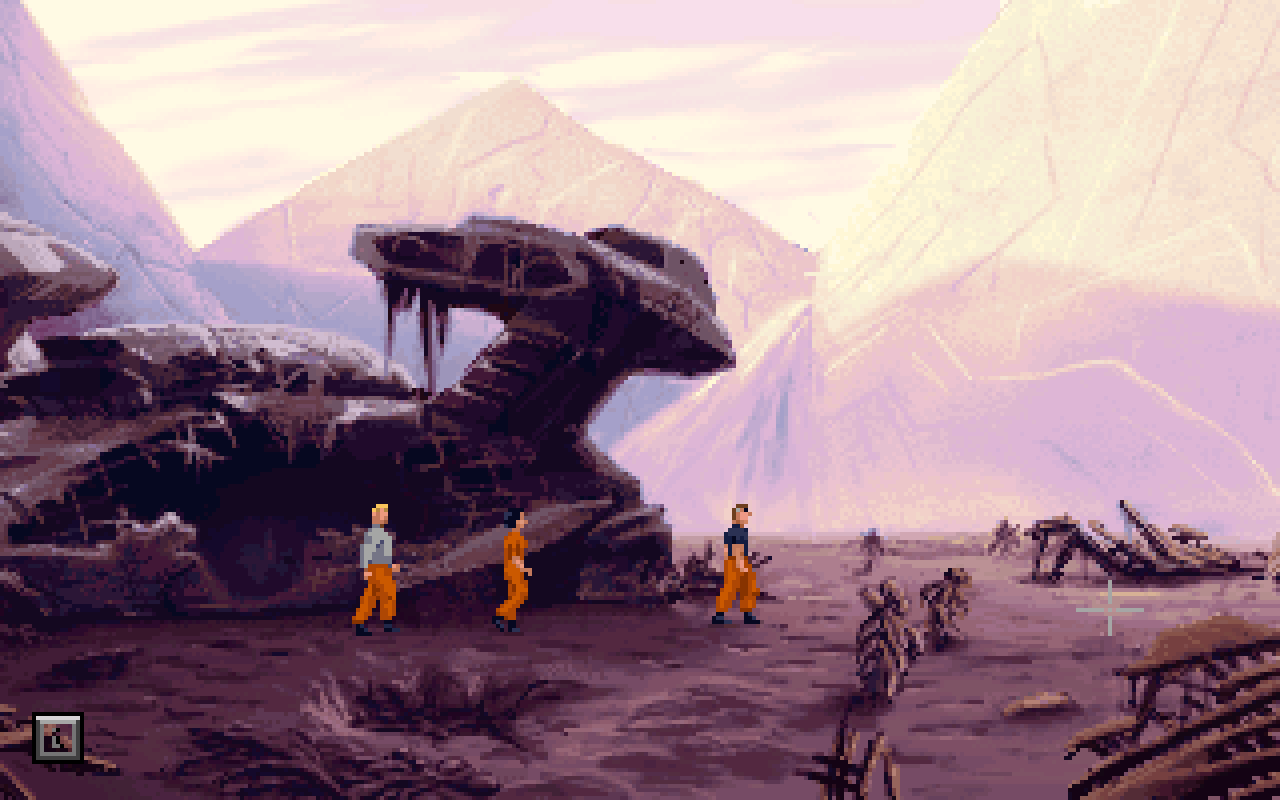
- The Dig (1995) is the first game featuring voice actors and a digital orchestral score. The Dig is a lot less humorous than the previous games. It dives deeper into a full science-fiction world, featuring a team trying to plant explosives on an asteroid to prevent its collision with the Earth. The game's story was envisioned by Steven Spielberg, as he figured producing the movie would be too expensive.
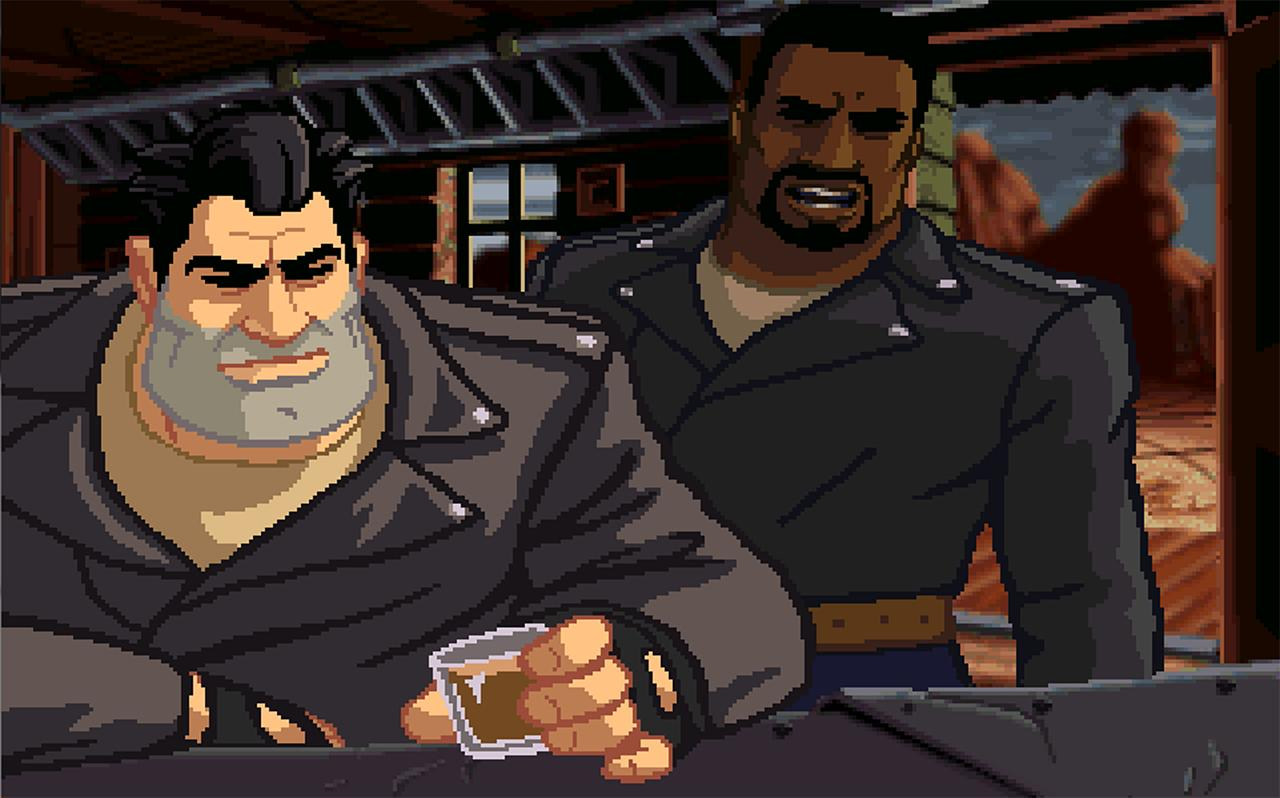
- Full Throttle (1995) was designed by Tim Schafer. The story of the game follows the motorcycle gang leader Ben, who must clear his name after being framed for the murder of a famous motorcycle manufacturing big boss.
- Sam & Max Hit The Road (1995): The game is based on the comic characters of Sam and Max, the "Freelance Police", an anthropomorphic dog and its fellow rabbit. The characters were created by Steve Purcell, originally debuted in a 1987 comic book series. Sam & Max take the case of a missing Bigfoot from a nearby circus, traveling through many American touristic sites to solve the mystery.
- Grim Fandango (1998): A cult favorite, blending Aztec mythology and film noir. Set in the Land of the Dead, it follows Manny Calavera’s surreal afterlife journey. It was LucasArts' first fully 3D adventure game and one of its last classics. On this one, action verbs and quirky objects to collect have disappeared, replaced by a 3D world navigated with the keyboard. The game was also highly praised for its richly written dialogue, complex characters, and unique atmosphere—making it a narrative experience that stood apart, even among the LucasArts titles.
Trailer of the Grim Fandango original game
The remastered games
Between 2009 and 2017, LucasArts remastered both Monkey Islands (released in 2009 and 2010) with new graphics, voice-overs and a new music. Tim Shaffer, who left LucasArts in 2000 to found Double Fine Productions, released the remastered versions of Grim Fandango (2015), Day of the Tentacle (2016) and Full Throttle in 2017.
About SCUMM
A key part of what made LucasArts games so revolutionary was the technology behind them—particularly the SCUMM engine, short for Script Creation Utility for Maniac Mansion.
Developed by Ron Gilbert and Aric Wilmunder in 1987, SCUMM allowed game designers to script complex puzzles, dialogue trees, and interactive environments using a flexible, visual scripting language. This made it easier to create rich, narrative-driven games and became the foundation for most LucasArts adventure titles throughout the 1990s.
SCUMM's influence extended beyond LucasArts. It became a model for how storytelling could work in games—eventually inspiring fan-made tools and projects, including ScummVM, an open-source software that lets players run these classic titles on modern systems. ScummVM (Virtual Machine) decouples the original games from their outdated engines, preserving their playability as well as their cultural and historical significance.
LucasArts now
Many things happened since the late 1990s. The company changed direction, was restructured, and continued to evolve and produce new games. It was acquired by Disney in 2012 for about 4 billion dollars. In 2013, Lucasfilm announced layoffs of most of the video game division staff, Disney deciding to focus on the Star Wars franchise to minimize financial risks.
Today, the original LucasArts website redirects to Star Wars games—a reminder of how the company's rich identity, once rooted in creative storytelling and experimental gameplay, has been largely absorbed into a singular franchise focus. New Indiana Jones and Star Wars titles are still being produced, but the era of wild experimentation and story-driven point-and-click games appears to be over.